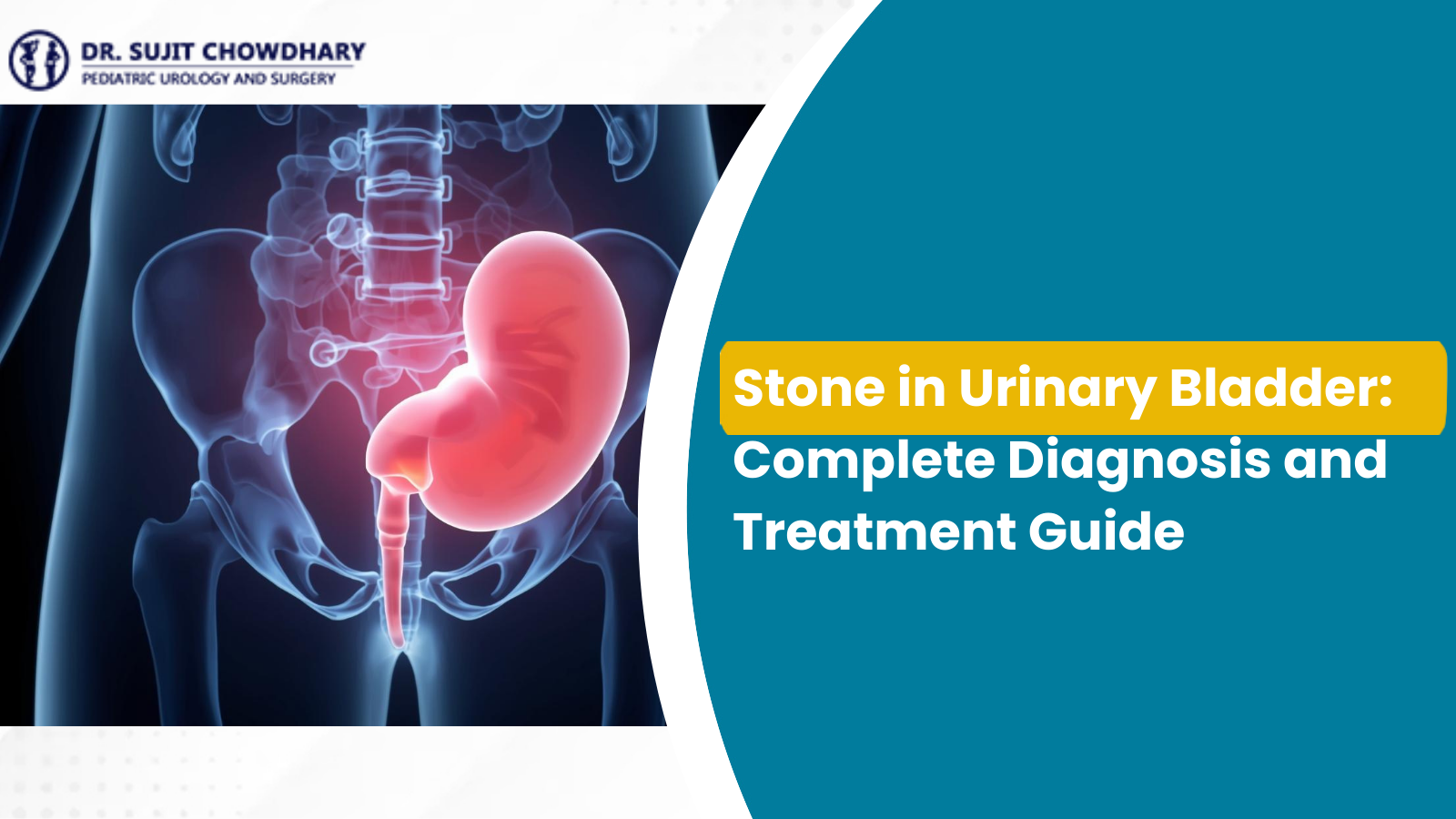
Hearing that a child has a stone in urinary bladder can stop a parent in their tracks. One moment life feels normal, the next there are scans, tests, new medical words, and a very scared little face looking up for reassurance. It is natural to worry about pain, surgery, and the long-term health of the kidneys and bladder.
Bladder stones are small, hard lumps made of minerals from urine that has stayed inside the bladder for too long. When the bladder does not empty properly, these minerals stick together and form a stone. In children, this often happens when there is an underlying urological problem, such as a weak bladder muscle, a nerve problem, or a structural issue present from birth.
The good news is that urinary bladder stone treatment in children is very advanced. With early bladder stone diagnosis, most children recover well, go back to normal activities, and avoid long-term damage. Modern options include medicine for bladder stone dissolution, gentle endoscopic procedures, and highly precise laser treatment for bladder stone.
For more than 25 years, डॉ. सुजीत चौधरी , leading paediatric urologist in Delhi-NCR, has looked after children with complex bladder and kidney conditions. His work combines international training, child-friendly care, and advanced tests such as paediatric urodynamics to find the real cause of each problem.
By the end of this guide, parents will understand why bladder stones form in children, how to spot warning signs, how doctors confirm the diagnosis, the full range of bladder stone treatment options, and how to prevent stones from returning. This knowledge can turn fear into clear, calm action.
“With the right diagnosis and calmly planned care, most children with bladder stones recover completely,” experienced paediatric urologists often reassure parents.
Key Takeaways
- Bladder stones in children are often linked to problems with bladder emptying but respond well to early, planned care. Many small stones can pass or shrink with more fluids, diet changes, and, in selected cases, medicine for bladder stone dissolution under specialist supervision.
- A careful bladder stone diagnosis with urine tests, ultrasound, and sometimes cystoscopy helps doctors select safe urinary bladder stone treatment for each child. This lowers the chance of repeated stones and protects kidney function.
- Modern laser treatment for bladder stone through a tiny camera allows stones to be broken into fine pieces without cuts on the skin. Recovery is quick, and children are usually active again within a few days after treatment by an experienced paediatric urologist.
- Children with neurogenic bladder or other congenital urological problems need long-term planning and paediatric urodynamic tests. Under expert care, these high-risk children can avoid many future stones and stay safer for years.
Understanding Bladder Stones In Children
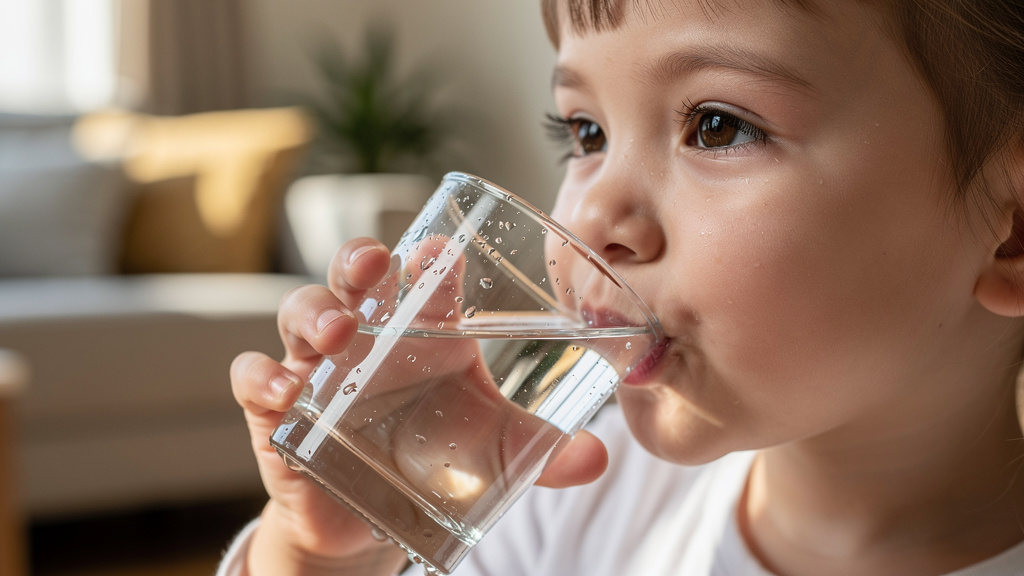
Doctors call bladder stones vesical calculi. In simple terms, these are hard lumps made from minerals that should have stayed dissolved in urine. When urine rests in the bladder for too long and becomes very concentrated, these minerals stick together and form crystals. Over time, crystals grow into one or more stones.
In children, this process often starts because the bladder is not emptying fully. The reason may be:
- a nerve problem
- a blockage at the outlet
- an abnormal shape of the bladder from birth
Sometimes a tiny stone that started in the kidney travels down and stays in the bladder, where it grows bigger. This is called a secondary or migratory stone.
Bladder stones have different chemical make-ups, such as:
- Calcium oxalate
- Calcium phosphate
- Uric acid (these may respond to medicine)
- Infection-related struvite stones, which form when bacteria change the urine chemistry
- Rare cystine stones in children with specific genetic conditions
It is also important to separate bladder stones from other types of stones. Kidney stones form higher up and cause side or back pain when they move down the ureter. Gallbladder stones are part of the digestive system and have nothing to do with urine. A stone in urinary bladder behaves differently, gives different symptoms, and needs a different style of treatment.
Children are not just “small adults”. Their bladders are still growing, many have congenital conditions, and they need gentle, specialised care. This is why paediatric urologists like डॉ. सुजीत चौधरी focus so carefully on how and why each stone has formed before choosing a treatment plan.
“In paediatric urology, treating the stone is only half the job; understanding why it formed is just as important,” experienced clinicians frequently emphasise.
Why Children With Neurogenic Bladder Are At Higher Risk
A neurogenic bladder is a bladder that does not work properly because the nerves controlling it are damaged or not formed correctly. In children, this often occurs with conditions such as spina bifida, spinal cord problems, or certain brain disorders present from birth. The messages between the brain, spinal cord, and bladder muscles are mixed or weak.
When the bladder cannot squeeze strongly or relax at the right time, urine does not empty fully. A pool of stale urine is left behind after every toilet visit. This leftover urine is rich in minerals and provides the perfect place for crystals and bacteria to collect. Over months, this can grow into a stone in urinary bladder.
Because of this, children with neurogenic bladder need very close attention from an experienced paediatric urologist. डॉ. सुजीत चौधरी uses detailed paediatric urodynamic tests to see exactly how the bladder fills and empties in these children. Based on this, he may recommend:
- timed toilet visits
- clean intermittent catheterisation (CIC)
- medicines to relax or strengthen the bladder muscle
- surgery to improve bladder emptying or outlet function
With the right plan, many high-risk children can avoid first-time or repeated stones. Regular reviews, bladder scans, and urine tests help pick up early changes so that treatment can be adjusted before a new stone develops. This long-term view is one of the strongest protections against future bladder stone problems.
As specialists often say, “Preventing the next stone starts with fixing how the bladder empties, not just removing the stone that is already there.”
Are You Experiencing Symptoms of Stone in Urinary Bladder?
Pain during urination, frequent urge to pass urine, blood in urine, or lower abdominal discomfort can be signs of a stone in urinary bladder. Early diagnosis and timely treatment are essential to avoid infection, blockage, or kidney damage. Dr. Sujit Chowdhary offers advanced diagnosis and effective treatment options for urinary bladder stones.
Consult a Specialist for Bladder Stone TreatmentRecognising The Signs: Symptoms Of Bladder Stones In Children
Some very small stones pass out with urine without any clear sign. However, once a stone in urinary bladder becomes larger or rough, it starts to irritate the bladder lining and block the flow of urine. Parents often notice changes in the child’s toilet habits or general comfort.
Common symptoms include:
- Lower tummy pain: One common sign is pain low down in the tummy, just above the pubic bone. Younger children may point to their lower belly, become clingy, or cry without clear reason. Older children might say they feel pressure, heaviness, or a sharp pain when they move or try to pass urine.
- Painful urination (dysuria): Passing urine can become painful, a feeling doctors call dysuria. A child may suddenly refuse to use the toilet, cry when passing urine, or say that “it burns” or “hurts” when they wee.
- Changes in urine flow: Parents may notice that the stream stops and starts, or that the child strains but only passes a few drops.
- Bladder control problems: A child who was dry at night may start wetting the bed again. There may be a need to pass urine very often, with a sense of urgency that does not match the amount passed. Some children find they can wee only in certain positions, such as squatting or lying down, as this moves the stone away from the outlet.
- Blood in the urine (haematuria): Urine may look pink, red, or cola-coloured, or it may just look cloudy and darker than usual. Any blood in a child’s urine should be checked by a doctor.
When several of these signs appear together, it is important to seek a prompt opinion from a paediatric urologist.
Many parents worry that tests and examination will frighten their child. डॉ. सुजीत चौधरी uses a calm, child-friendly style, explains each step in simple words, and keeps parents close by, which helps most children manage the process very well.
Comprehensive Bladder Stone Diagnosis
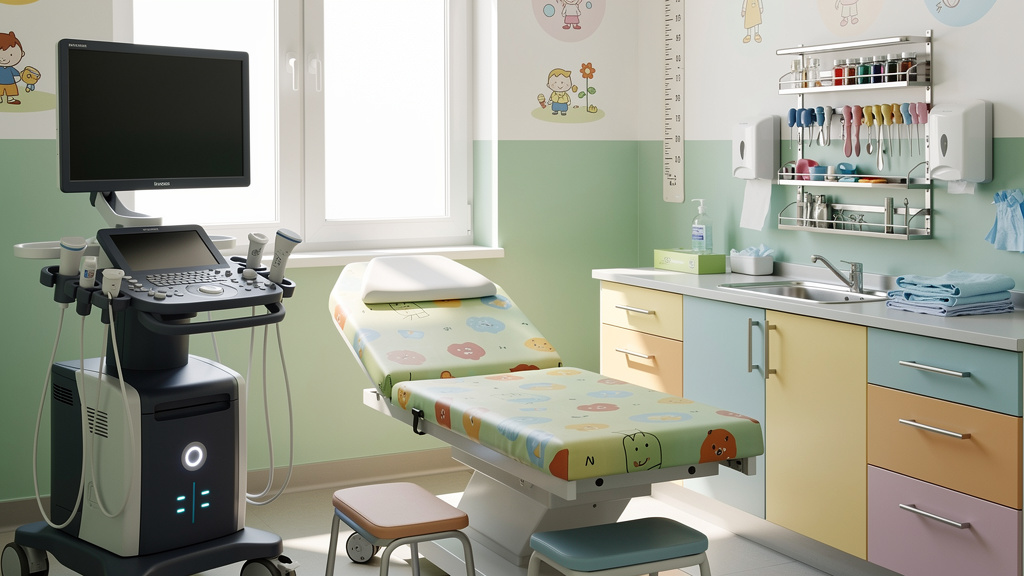
Accurate bladder stone diagnosis is the first step towards safe and effective urinary bladder stone treatment. डॉ. सुजीत चौधरी follows a clear, stepwise approach that looks at both the stone and the underlying bladder problem.
The visit usually starts with a detailed talk about symptoms. Parents are asked about pain, wetting, toilet habits, infections, previous scans, and any known problems such as spina bifida or kidney disease. This gives early clues about why the stone has formed. A gentle physical examination then checks the tummy, spine, and genital area without causing embarrassment or fear.
Next, a urinalysis looks for blood, white cells, crystals, and signs of infection. A urine culture may be sent to the laboratory if infection is suspected. These results help plan antibiotics when needed and can hint at the type of stone, such as infection-related struvite stones or uric acid stones.
Imaging plays a central role. In children, ultrasound is usually the first test, because it does not use radiation and is completely painless. A small probe with gel is moved over the tummy to show the bladder, kidneys, and any stones. In some cases, an X-ray or CT scan may be advised to see the number, size, and position of stones more clearly.
Sometimes, cystoscopy is needed. This is a test in which a very thin camera is passed through the urethra under anaesthesia to look directly inside the bladder. It allows the urologist to see the shape, size, and exact position of the stone and the state of the bladder lining. Often, stone removal can be done during the same procedure.
Before surgery, डॉ. सुजीत चौधरी frequently adds paediatric urodynamic testing, especially when he suspects a neurogenic bladder or other functional problem. This complete approach does not just confirm that there is a stone in urinary bladder; it explains why it formed, which is vital for long-term success.
Typical tests in a full diagnostic work-up include:
- Urinalysis and urine culture
- Ultrasound of kidneys and bladder
- X-ray or CT scan in selected cases
- Cystoscopy when direct viewing or removal is needed
- Paediatric urodynamics for high-risk or complex situations
“The best bladder stone treatment starts with asking why it formed, not just where it is,” many paediatric urologists remind families.
The Critical Role Of Paediatric Urodynamics
Paediatric urodynamics are specialised tests that study how a child’s bladder stores and passes urine. A very thin tube is placed into the bladder and sometimes the rectum. As the bladder is filled slowly with sterile fluid, sensors measure pressure and flow while the child sits or lies comfortably.
These measurements show whether the bladder relaxes properly during filling, whether it contracts too early, whether the outlet opens at the right moment, and how much urine is left behind. For children with suspected neurogenic bladder, valve problems, or previous surgery, this information is essential.
डॉ. सुजीत चौधरी recommends urodynamic testing before many surgical procedures for bladder stones in high-risk children. The results guide decisions about medicines, catheter use, or the need for operations to improve emptying. They also help predict which children might form new stones unless the underlying issue is corrected.
Parents often worry that this test will be painful or frightening. In practice, it is done with local anaesthetic gel, distraction, and a gentle team used to working with children. The test is short, and most children tolerate it very well. This level of detailed testing is a key marker of high-quality paediatric urological care.
As one senior paediatric urologist describes it, “Urodynamics turns guesswork into clear numbers that guide every important decision.”
Bladder Stone Treatment Options: From Conservative To Surgical
Once tests confirm a stone in urinary bladder, the next step is to choose the safest and most effective treatment. There is no single plan for every child. Bladder stone treatment options depend on the size and number of stones, their chemical make-up, the child’s age, symptoms, and any underlying urological condition.
Whenever it is safe, डॉ. सुजीत चौधरी prefers the least invasive choice. For very small stones that are not causing blockage or infection, this may mean a period of close observation. Children are encouraged to drink more water, and diet changes are made to reduce stone-forming minerals. Regular ultrasound checks show whether the stone is changing in size or position.
For certain uric acid stones, medicine can help with bladder stone dissolution. Medicines such as potassium citrate make the urine less acidic, and over weeks or months the stone can shrink. This method needs careful monitoring of urine pH, kidney function, and stone size. It is not suitable for most calcium-based stones.
When stones are too large to pass or are causing symptoms, endoscopic removal is usually advised. The main method is cystolitholapaxy, in which a thin scope is passed through the urethra into the bladder under anaesthesia. Special tools, often using laser treatment for bladder stone, break the stone into tiny pieces, which are then washed out.
In rare cases where stones are very large, very hard, or linked to other problems such as a big diverticulum or complex anatomy, an open operation called cystolithotomy may be safer. Here, a small cut is made on the lower tummy, the bladder is opened, and the stone is removed directly. This can be combined with repair of any structural problem.
Throughout, डॉ. सुजीत चौधरी keeps a strong focus on treating the cause as well as the stone. His 25-year record with zero complaints reflects careful case selection, precise surgical work, and clear communication with families at every step.
Are You Experiencing Symptoms of Stone in Urinary Bladder?
Pain during urination, frequent urge to pass urine, blood in urine, or lower abdominal discomfort can be signs of a stone in urinary bladder. Early diagnosis and timely treatment are essential to avoid infection, blockage, or kidney damage. Dr. Sujit Chowdhary offers advanced diagnosis and effective treatment options for urinary bladder stones.
Consult a Specialist for Bladder Stone TreatmentLaser Treatment For Bladder Stone: Modern Minimally Invasive Solution
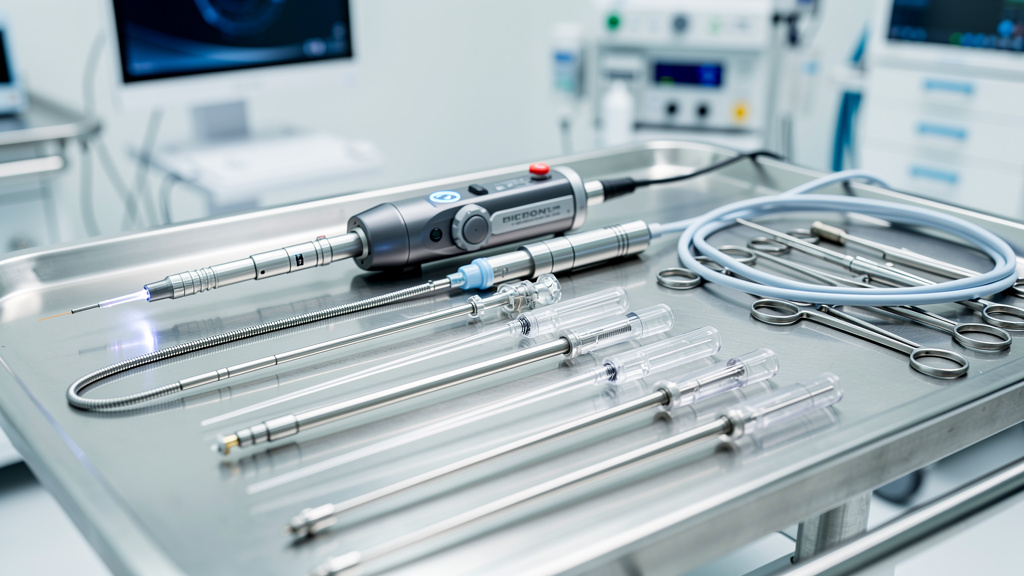
For many children, laser treatment for bladder stone offers an excellent balance of safety, comfort, and quick recovery. The most common system uses Holmium laser technology. This laser delivers short bursts of energy through a very thin fibre passed inside a cystoscope.
During cystolitholapaxy, the child is under general or spinal anaesthesia, so no pain is felt. The cystoscope is passed gently through the urethra into the bladder. Once the stone is seen, the laser fibre is placed in contact with it. The laser energy breaks the stone into sand-like pieces, which are then flushed out through the scope.
This method has several advantages for children:
- No cuts on the skin and no visible scar
- Usually minimal bleeding
- Mild, short-lived pain after the procedure
- Short hospital stay, often day-care or one night
- Quick return to school and play, usually within a few days
Parents often ask about safety. Holmium lasers have been used for many years in paediatric urology with very good outcomes when handled by trained specialists. डॉ. सुजीत चौधरी is highly experienced in minimally invasive and laser-based procedures in children. His team uses strict safety checks, child-sized instruments, and careful anaesthesia plans to keep risk as low as possible.
Surgical Removal: When Open Cystolithotomy Is Necessary
Although endoscopic laser techniques work for most cases, some children need an open operation called cystolithotomy. This is usually advised when:
- the stone is extremely large
- there are many stones packed together
- the child’s anatomy makes endoscopic access difficult or unsafe
During cystolithotomy, the child is given general anaesthesia. The surgeon makes a small cut in the lower abdomen and then opens the bladder. The stone or stones are removed whole, and the bladder is closed again with fine stitches. If there is an associated problem such as a diverticulum or blockage, डॉ. सुजीत चौधरी often corrects it in the same sitting.
Children who have open surgery usually stay in hospital for a few days. A catheter is left in the bladder for a short period to allow healing. Pain is controlled with medicines, and most children are walking and eating within a day or two. Parents receive clear guidance on wound care, activity limits, and follow-up plans.
With more than 25 years of experience in complex paediatric urology, Dr. Chowdhary is very familiar with these operations. His careful technique and structured post-operative care help children recover safely and comfortably.
Addressing Underlying Causes: Essential For Long-Term Success
Removing a stone in urinary bladder is only part of the story. If the reason for stone formation is not corrected, there is a strong chance that new stones will appear in the future. Long-term success depends on finding and treating the root cause.
In children, common underlying problems include:
- Neurogenic bladder
- Structural abnormalities of the bladder or urethra
- Metabolic conditions that increase certain minerals in the urine
- Scarring from past infections or surgery
Each of these needs its own plan.
For neurogenic bladder, management may include clean intermittent catheterisation (CIC) to empty the bladder fully several times a day. Medicines can help relax or strengthen the bladder muscle as needed. Urodynamic studies guide these choices and are repeated over time to monitor progress.
Certain anatomical issues, such as bladder diverticula, urethral valves, or tight narrowing, may need surgery. Correcting these problems reduces urine stasis and lowers the risk of future stones. Children who have had bladder augmentation surgery need lifelong follow-up, as mucus and altered flow can make stones more likely.
Recurrent urinary tract infections also need firm control. This may involve targeted antibiotics, bladder habits training, and checks for constipation, which often worsens bladder problems. डॉ. सुजीत चौधरी looks at the whole child, not just the scan, and brings all these threads together into one clear plan.
Regular follow-up visits, repeat ultrasounds, and occasional urodynamic tests help confirm that the bladder is emptying well and that urinary bladder stone size reduction or prevention is on track. This joined-up method gives children the best chance of staying stone-free.
Bladder Stone Dissolution And Size Reduction: Non-Surgical Approaches
Not every bladder stone in a child needs immediate surgery. In selected cases, non-surgical methods can allow urinary bladder stone size reduction or complete clearance without instruments inside the bladder. The key is careful selection and close monitoring by an experienced paediatric urologist.
Very small stones, often less than a few millimetres, may pass naturally. Parents are advised to increase the child’s fluid intake so that urine stays pale yellow and plentiful. More urine flowing through the bladder reduces the chance that minerals will settle and helps flush out small stones and crystals.
For uric acid stones, medicine-based bladder stone dissolution is sometimes possible. Drugs such as potassium citrate change the urine from acidic to more alkaline. In this new chemical setting, uric acid stones can begin to soften and shrink. This process can take several weeks to months and requires regular checks of urine pH and repeat ultrasounds.
During conservative treatment, careful follow-up is essential. डॉ. सुजीत चौधरी usually schedules repeat scans to make sure the stone is not growing or moving into a position where it could block urine flow. If pain increases, infection appears, or the stone does not shrink as expected, the plan is switched to active removal.
Diet changes can support these non-surgical methods. Reducing high-purine foods for uric acid stones and moderating high-oxalate items for calcium oxalate stones helps. At the same time, normal calcium intake is kept steady, as very low calcium can actually encourage some stone types to form.
Parents can feel reassured that surgery is suggested only when needed. When used in the right child at the right time, non-surgical approaches are an important part of urinary bladder stone treatment.
Prevention Strategies: Protecting Your Child From Future Stones

Once a child has had a stone in urinary bladder, prevention becomes just as important as treatment. Simple daily habits, combined with expert follow-up, can greatly lower the chance of another stone forming.
Key prevention steps include:
- Good hydration: Children should drink enough water spread through the day so that their urine stays pale yellow. Exact amounts depend on age and weight, but many school-age children need around 1.5 to 2 litres per day, more in hot weather or during active play. Water is far better than sugary drinks for this purpose.
- Diet matched to stone type:
- For uric acid stones, red meat, organ meats, and certain seafood are reduced.
- For calcium oxalate stones, foods such as spinach, beetroot, chocolate, and large amounts of nuts are moderated, not removed.
- Adequate dairy intake is still important, as normal calcium in food can help bind oxalate in the gut.
- Citrate-rich foods: Citrus fruits such as lemons, limes, and oranges provide natural citrate, which helps stop some stones forming. Including these in the diet, where there is no allergy or other medical reason to avoid them, can be helpful.
- Bladder care in high-risk children: Children with neurogenic bladder or structural problems need ongoing measures like regular catheterisation, bladder training, and close review by a paediatric urologist. Prompt treatment of urinary tract infections is vital, as repeated infections can drive stone formation.
डॉ. सुजीत चौधरी offers structured follow-up plans that may include periodic ultrasound scans and urine checks. Clear written advice helps parents keep track of fluids, diet, and medicines. With this shared effort, the risk of another bladder stone can be kept low.
A common teaching in paediatric nephrology is, “The best kidney or bladder stone is the one that never forms in the first place.”
Potential Complications Of Untreated Bladder Stones
While it is important not to panic, parents should understand why doctors take bladder stones seriously. A stone in urinary bladder that is left without proper care can cause several health problems over time. The positive news is that these outcomes are usually avoidable with early expert treatment.
Possible complications include:
- Chronic discomfort: Ongoing irritation from a stone can cause chronic lower tummy pain, frequent and painful urination, and constant trips to the toilet. This can disturb sleep, school, and play. Children may become anxious about using the toilet and hold urine for too long, which then makes things worse.
- Repeated urinary tract infections (UTIs): Bladder stones act as a surface for bacteria to grow. This can lead to repeated UTIs, with fever, foul-smelling urine, and tiredness. Some children end up on many courses of antibiotics, which still do not clear the infection fully until the stone is removed.
- Acute urinary retention: In some cases, a stone can move and block the outlet of the bladder. This causes acute urinary retention, a sudden, very painful state where the child cannot pass urine at all. The bladder becomes overfull and stretched. This situation is an emergency and needs urgent hospital treatment to drain the bladder.
- Kidney damage: Long-standing blockage or high bladder pressures can push urine back up towards the kidneys, causing hydronephrosis and, in severe cases, permanent kidney damage.
Very large stones that irritate the bladder lining for many years have been linked with a higher risk of certain bladder cancers in adults, although this is rare in children.
By seeking prompt advice from specialists like डॉ. सुजीत चौधरी , parents can prevent these complications. Timely diagnosis and planned urinary bladder stone treatment protect both the bladder and the kidneys and help children return to a normal, active life.
Why Choose Dr. Sujit Chowdhary For Paediatric Bladder Stone Treatment
Choosing the right specialist is one of the most important steps parents can take for a child with a stone in urinary bladder. डॉ. सुजीत चौधरी is a leading paediatric urologist in Delhi-NCR, with over 25 years of exclusive experience in caring for infants, children, and teenagers with urological problems.
His training includes prestigious fellowships from Royal Colleges and the American College of Surgeons, and his work has been recognised by the Indian Association of Paediatric Surgeons for surgical excellence. Just as important for parents, he has a long-standing record of safe practice with zero complaints.
Dr. Chowdhary combines this background with advanced technology. His practice offers paediatric urodynamic testing, high-quality ultrasound and imaging, minimally invasive endoscopic surgery, and laser treatment for bladder stone using child-sized instruments. This means children can receive very high-level care close to home.
The care environment is calm and child-friendly. Examinations are gentle, explanations are simple, and parents are fully involved in decisions. Treatment plans are individual, based on the child’s symptoms, test results, and family needs, rather than a standard “one plan fits all” approach.
With 24/7 tele or video consultation options and a clear focus on ethical, affordable care, डॉ. सुजीत चौधरी is a trusted partner for families across Delhi-NCR and beyond who are facing bladder stone and other paediatric urology concerns.
“Parents need clear answers, honest options, and time to ask questions. That is the heart of safe paediatric surgical care,” doctors like Dr. Chowdhary often tell families.
Conclusion
Bladder stones in children can sound frightening at first, but they are treatable conditions. With careful bladder stone diagnosis, modern urinary bladder stone treatment, and close follow-up, most children recover fully and return to normal play, school, and sleep.
Treatment options range from increased fluids and medicine for bladder stone dissolution in selected cases, through minimally invasive laser cystolitholapaxy, to open surgery for the rare very large stone. What matters most is that the plan matches the child’s stone type, bladder function, and overall health.
Long-term success depends on more than removing the stone. Addressing underlying causes such as neurogenic bladder, anatomical problems, or infection patterns is the key to preventing a new stone in urinary bladder from forming. Regular monitoring, healthy habits, and clear guidance all play a part.
With his combination of deep experience, advanced paediatric urodynamic skills, and child-centred care, डॉ. सुजीत चौधरी offers families in Delhi-NCR a safe and reassuring path through diagnosis, treatment, and prevention. If a child shows symptoms suggestive of a bladder stone, arranging an early consultation can make all the difference to their comfort and long-term health.
Are You Experiencing Symptoms of Stone in Urinary Bladder?
Pain during urination, frequent urge to pass urine, blood in urine, or lower abdominal discomfort can be signs of a stone in urinary bladder. Early diagnosis and timely treatment are essential to avoid infection, blockage, or kidney damage. Dr. Sujit Chowdhary offers advanced diagnosis and effective treatment options for urinary bladder stones.
Consult a Specialist for Bladder Stone TreatmentCan Bladder Stones Dissolve Naturally Without Treatment?
Very small bladder stones can sometimes pass out naturally when a child drinks more water and stays well hydrated. In certain cases, uric acid stones can shrink with medicines such as potassium citrate that change urine acidity. Most calcium-based stones do not dissolve and need active treatment. Even when hoping for natural passage, medical supervision and repeat scans are important to make sure stones are not growing or blocking urine flow.
How Long Does Laser Treatment For Bladder Stone Take?
For most children, endoscopic laser treatment for bladder stone, or cystolitholapaxy, takes around 30 to 60 minutes, depending on the size and number of stones. The procedure is done under general or spinal anaesthesia, so the child does not feel pain. Many children go home the same day or after one night in hospital. A couple of quiet days at home are usually enough before returning to school and light play within a week.
Is Bladder Stone Surgery Painful For Children?
During bladder stone surgery, whether endoscopic or open, modern anaesthesia means the child feels no pain. After the procedure, there may be mild stinging when passing urine or some tummy discomfort for a day or two. Pain medicines taken by mouth control this well in most children. डॉ. सुजीत चौधरी and his team also use a gentle, reassuring approach to reduce anxiety before and after surgery.
What Foods Should My Child Avoid To Prevent Bladder Stones?
Food advice depends on the stone type. After testing and stone analysis:
Children with uric acid stones are usually asked to limit red meat, organ meats, and some seafood.
For calcium oxalate stones, spinach, beetroot, chocolate, and large amounts of nuts are reduced, not removed.
Citrus fruits like lemons and oranges can help protect against many stone types.
Dairy is normally continued, as normal calcium intake is helpful.
Whatever the stone type, regular water intake across the day is essential.
How Often Should My Child Have Follow-Up Ultrasounds After Bladder Stone Treatment?
Most children have a first follow-up ultrasound about four to six weeks after treatment to confirm that the bladder is clear and emptying well. If there are no signs of new stones, scans every six months for the first couple of years are common. Children with neurogenic bladder, bladder augmentation, or repeated infections may need more frequent checks. If symptoms such as pain or wetting return, paediatric urodynamic tests may be repeated to reassess bladder function.